Sunday, March 11, 2012

What a Surprise!

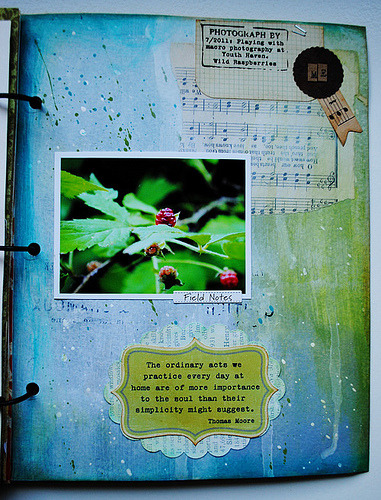
Field-Notes (by marynbtol)

Monday, March 5, 2012

WIP: Missional


A few years ago, as our church began it's shift to an outwardly focused mindset, I began exploring what it means to be missional. But I got distracted by other things and slowly drifted away from my pursuit of understanding. I would occassionally dabble in it when I ran across a book, article or blog that pertained to the topic, but I didn't stick around and dig in. Lately I've been feeling the draw to return to digging into my pursuit of understanding this phrase and theology as it seems vital to where we find ourselves as a church right now...or at least where I find myself in my life and ministry.
So I thought peridoically I would write in WIP (work in progress): Missional to share what I am exploring as I explore it. It will be a way to help me formulate my thoughts and bring together all that I am reading. I'm not going to go back and start at the beginning of my studies from years past, but just dive into where I am right now.

At the root of studying missional is the question: What is our mission as God's people, as the Church? It's a question of purpose and identity. Yet is is also a question of mindset and lifestyle.

"Don't confuse missional with any methodology of "doing" church. Missional is about a way of "being" the church in the world. It's not about a what; it's about a who. The missional church is the people of God partnering in God's redemptive mission in the world...As the people of God we're to reflect God's heart to the world."
Reggie McNeal, Catching the Missional Wave, Rev Mag., March/April 2009

This past week I have been absorbed in looking at John's use of the word "sent" in his Gospel. John uses two Greek words (pempo and apostello) for sent/send in his Gospel and it is determined by many biblical scholars that their use is synonymous. An example of this is in John 20:21:

Again Jesus said, “Peace be with you! As the Father has sent me, I am sending you.”

"Sent" is pempo and "sending" is apostello. John uses these words a total of 42 times in his Gospel, which is 27% of their combined usage in the New Testament.
 A.C. Winn writes in A Sense of Mission:
"A significant aspect of John the theologian's theological method is the repeated use of certain key words. He repeats ordinary words in such a fashion that they bear extraordinary theological freight. Such words include light, darkness, spirit, flesh, life, love, glory, witness, judgment, truth, Father, Son, world, work, sign, disciple, know, believe. It has not so often been noticed that there is a third great verb along with 'know' and 'believe', the verb 'send, sent'. This is the great missionary verb…" (Winn 1981:17 cf. Arias 1992:82).

So, from just this small amount of study on the frequency of John's use of the word "sent", I'm beginning to get a picture that not only is John's Gospel an evangelistic book and an edifying book, but it is also a missional book. 

"As the father has sent me, I am sending you." Jesus' mission is our mission. In many of the same passages where Jesus speaks of being sent by the Father, he also speaks of his own dependency on the Father.
"I tell you the truth, The Son can do nothing by himself; he can do only what he sees his Father doing, because whatever the Father does the Son also does....By myself I can do nothing; I judge only as I hear, and my judgment is just, for I seek not to please myself but him who sent me." John 5:19, 30
"For I have come down from heaven not to do my will but to do the will of him who sent me." John 6:38
See also John 4:34; 7:16; 7:28; 8:28-29, 42; 12:49; 14:24.

Questions I'm pondering:
  • What does it look like for us to be God's "sent" people in everyday life, both individually as Christ-followers and corporately as the church?
  • If our identity as God's people is as those who are sent into the world as Jesus was sent into the world, how does that change the way we define the word mission and how we typically think of "missions" as simply a program of the church?
  • What perspectives and mindsets do we need to change in the church to live and operate as God's sent people? To live missionally? To think missionally?
  • Other words used for Christ-followers that have the feeling of being "sent" are ambassadors, messengers, apostles, missionaries. Does our view of how we live in everyday life change if we think of ourselves in these terms?
  • If Jesus, the Son of God, was so dependent on God the Father, how much more must I/we be dependent on him to do the mission He has called us to?

Monday, February 20, 2012

The Fullness of Christ

" And God placed all things under His feet and appointed Him to be head over everything for the church, which is His body, the fullness of Him, who fills everything in every way." Ephesians 1:22-23
I've been thinking about this verse for a few days now. Paul says the church is the fullness of Christ. How is the church the fullness of Christ? My thought is that it is incarnational. The church, Christ's body, is the physical form of His presence on earth. It is His fullness manifested. In its expression, the church is the fullness of Christ displayed, embodied. This morning I pondered other Scripture on how Jesus embodied God the Father.
Jesus is described as:
"He is the image of the invisible God." Colossians 1:15
"The Son is the radiance of God's glory and the exact representation of his being, sustaining all things by his powerful word." Hebrews 1:3
"the light of the gospel of the glory of Christ, who is the image of God." 2 Corinthians 4:4
"The Word became flesh and made his dwelling among us. We have seen his glory, the glory of the One and Only, who came from the Father, full of grace and truth...No one has ever seen God, but God the One and Only, who is at the Father's side, has made him known."  John 1:14, 18
"God was pleased to have all his fullness dwell in the Son."  Colossians 1:19
"For in Christ all the fullness of the Deity lives in bodily form, and you have been given fullness in Christ, who is the head over every power and authority." Colossians 2:9-10

We embody Christ through the words and deeds of His gospel. John the Baptist's disciples asked Jesus if he was the one who was to come, the promised Messiah. He replied: "Go back and report to John what you have seen and heard: The blind receive sight, the lame walk, those who have leprosy are cured, the deaf hear, the dead are raised, and the good news is preached to the poor." Luke 7:22


"As the Body of Christ, we are the community through which Christ is present in and reaching out to the world. The witnessing role of the church is the representation to the world (and to each other in the church) of the fact and opportunity of the gospel. To be the Body of Christ, then, means to be the channels through which the work of Christ continues to be done. Christ has committed to his church the proclamation of the great event of reconciliation that he accomplished on the cross, and, in that sense, the completion of the work he both began and did: the declaration of the "wonderful deed of him who called you out of darkness into his marvelous light" (1 Pet. 2:9). As his Body, we are to incorporate ("embody") that message as we proclaim it."  Darrell Guder, Be My Witnesses, p28.

It is important that, as Christ-followers, we each embody Christ in us in word and in deed. But, I think it is more important, in light of Paul's description of the church as the fullness of Christ, to think about how the church corporately lives out our identity and role as the fullness of Christ. Together we embody Christ who embodied God the Father. We proclaim to the world in deed and in word the fullness of Christ. And one of those ways we embody this is through love. God always brings it back to that.
"No one has ever seen God: but if we love one another, God lives in us and his love is made complete in us."  1 John 4:12
"By this all men will know that you are my disciples, if you love one another." John 13:35

Incarnational and missional. The fullness of Christ.

Monday, January 30, 2012

The Word I Didn't Think Of

Today I finally read Julie Balzer's post from last week for her Art Journal Every Day group. Her post fit so well with our lunch conversation at the office last Thursday that I spoke about in my last post. She gave a name to those things that block our creativity: ePEcTaTioNs. Not a complex word, but one I didn't think of when I was writing. It fits so well. Our expectations of our art, of ourselves, of others, block us from moving ahead. So, we don't make art. We don't dream. We don't allow ourselves to grow. We don't work through conflict. We don't love others. We don't take steps of faith. We let our expectations immobilize us. Letting go of expectations is valuing and enjoying the process.

Some tips from Julie on letting go of expectations:

Here are some ways to help you let go of expectations:
  • Narrow your focus.  Instead of thinking of the end result, think about what you want to accomplish in the next few minutes.  For example: I want to use this stencil.
  • Follow the shiny ball.  What does that mean?  When something interesting flits across your line of sight or through your mind, follow it.  Take that detour.
  • Walk away.  I often find that the pieces I hate the most are the ones where I was relentlessly pushing and pushing and pushing and overworking my art.  Sometimes taking a break and coming back another day with fresh eyes is just the ticket.
  • Do something to purposely ruin it.  Rip it.  Cover it with paint.  Ruin it.  Gasp.  It works.  It makes you less afraid.  And forces you to let go of your expectations.
  • Don't compare yourself to others.  Maybe I should say that again: don't compare yourself to others.  As Dr. Seuss has taught us, "No one is youer than you."  Art journaling is not a competition.
  • Make art every day.  When making art becomes part of your daily routine it really takes the pressure off.  Release that valve by taking ten minutes a day to do something artistic.
http://balzerdesigns.typepad.com/balzer_designs/2012/01/art-journal-every-day-let-go-of-expectations.html

So, I intend to make art every day this year and enjoy the process!

From my Scrapbook Life Journal

Expectation is the root of all heartache.  William Shakespeare
 
Do what you can, with what you have, where you are.  Theodore Roosevelt

Dreams grow holy put into action.  Adelaide Proctor

Friday, January 27, 2012

Just Do It.

Ira Glass on the Creative Process

This video is cool and creative. During our lunch at the office yesterday we were talking about the things that block us or keep us from doing the creative things we feel called to. I struggled with this so much in the early days as I explored making art: the things I made had to have a purpose ( a gift or a specific project), I had to have it all planned out first, it had to be perfect, etc. But over the past year as I explored last year's word, freedom, making art became one of the big areas I gained freedom in. And slowly those things that were blocking me from being creative and making art began to subside. What I found was that it is actually the process, not the finished product, that brings the most release, relaxation and refreshment, and what energizes me the most. So, what actually stopped the creative blocks was simply doing it. Just make art. Just do it.

Just make art and enjoy the process!

Last weeks making art fun was Bible study notebooks for my group members for our new study of the book of Matthew. Making books is so relaxing!